I Can't Stop Thinking About Animal Farm
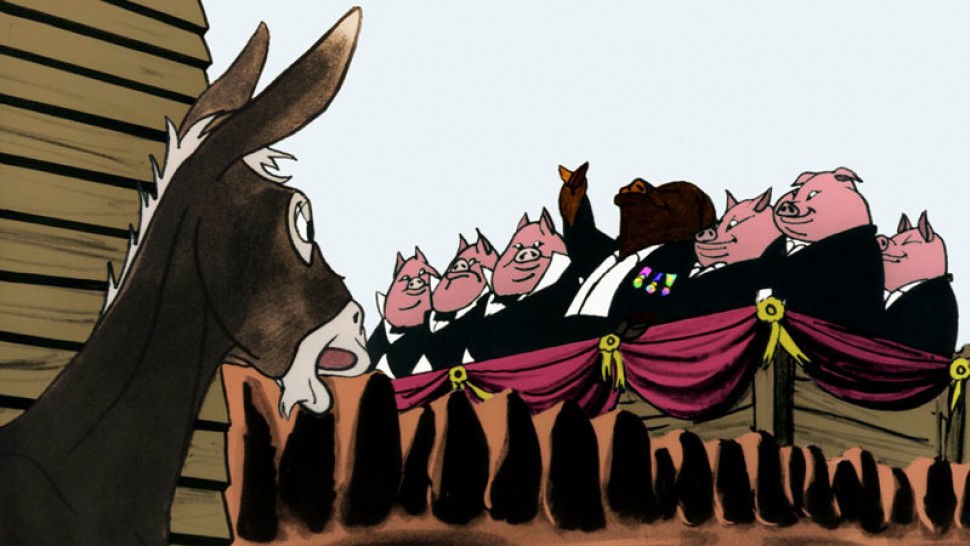
I have finished reading Animal Farm, and this has been lingering in my mind since. It was actually based on the Russian Revolution, but it actually reflects something deeper about the psychology of power, and that is the reason why I still find it relevant. All the while, I couldn't escape this feeling of familiarity. It amazed me that it was written about a hundred years ago.
Power Corrupts
The first thing that we notice here is that there will always be a power struggle on top of the order. Even if the base of the revolution is equality for all, even if the Prime Minister says he is not there for power but for service, there will always be a fight for power. And by extension, people in power will do absolutely anything necessary to remain in power. Power corrupts. There isn't anyone who can see the power and won't go grabbing for it.
There are familiar patterns used to get into power and keep it. Napoleon uses the dogs or the military to grab that power. We see that all around us. What this highlights is the unethical use of power to suppress the opposition to create an absolute apex power position where no one can challenge the authority. Which is basically a common pattern all around us. When the opposition is weakened, the accountability disappears.
At the turn of it, they didn't realise that they had turned into the same cruel officers they revolted against. This is the central theme of the book. Power corrupts, it always does.
Media, Language, and Figures
It was almost unavoidable to see that use of media (in terms of the informer pig Squelar), language, and made-up figures to manipulate people into believing that we are living in some sort of heaven under the current authority. In reality, there was less food and more work. It is a constant theme in Animal Farm and 1984 that these lies are repeated and fed so many times that we start to doubt ourselves instead of questioning the government. This is the most identifiable theme in the book because this is debated so much around us. The informer from the authority will state that the economy has raised and GDP tripled, but you can see around yourself that life has only become harder to live in.
The use of language is also highlighted in the spreading of propaganda through songs and poems. In today's world, this could be translated into songs, films, and especially social media. This could be seen in today's phrase Brainwashing through WhatsApp University. One more acute analogy between today's world and Animal Farm is the concept of Andhbhakt, which is represented through the horse Boxer when he says, 'Napoleon is always right.'
The Contradictory Philosophy
The prime example of language as a tool of manipulation is shown in the quote
All animals are equal, but some animals are more equal than others.
It shows how politicians will use language to manipulate their subjects. If you ask someone, they will refer to the first half of the quote, that equality is in the spirit of animalism. While still, they will enjoy the special rights because some animals are more equal than others.
One of the prime examples I can think of at the top of my mind is Hindu nationalism. The top politician will say that it's in the core philosophy of Hinduism that we accept everyone with open arms; vasudhaiv kutumbkam, the whole earth, with its different religions and cultures, is our family. And yet they won't tolerate the other religious practices, and cite that they have to do the needful to protect their religion. They will come out on top in both scenarios.
The Slow Disappearance of Rights
The complete shift of power doesn't happen overnight. This is the subtle point we might miss. Slowly but surely the history is changed, the constitution is amended, and rights are taken away. Every little decision, every little amendment, is maintained in the light of goodness for the people, but the overall effect is horrifying. All of the things mentioned in the book, I feel, are the most important to look after.
Every new policy, new law, new amendment, they will portray as the necessary good for the people. They will say things like surveillance is necessary for security and take away our privacy rights, and ironically, they will cite privacy rights to take away the right of information. They will say that elections take time and effort, so we should reduce the frequency of elections. They will make it look like it's the absolute necessity of the hour. Slogans, poems, and songs will be used as linguistic tools to manipulate people. They will make the case that other intelligence agencies are hacking and tampering with the election result because they can't see the rise of new India and therefore it's necessary to dismantle the election, and we will fall for it. We won't realise when democracy turned into dictatorship. It won't happen overnight; it will be a slow, painful death. We need to take a cautious approach and question the intention for every change in paradigm.
The Common Enemy
In order to run away from accountability, the authority will create a common enemy and blame him for everything. This is quite obvious. If you want to stop fighting internally, you have to create an external demon. Governments all over the world use this trick.
This is very common in today's politics. Like Snowball in Napoleon's reign, Nehru and Gandhi is criticised today. They have been put as scapegoat for everything that goes wrong in today's world. I can't state anything political here because I am too dumb to understand politics but there seems a pretty analogy between Snowball and Nehru (and Gandhi) and it is very hard to ignore.
Conclusion
Overall, this book was an astonishing read for me. It is the book which will remain in my head for a long time, and I will come back to it and read it again and again many times. Not only did this give me a clear view of things, but through various analogies, this gave me a framework to think over situations. I really, really loved and enjoyed this book.